


This page has been archived and is being provided for reference purposes only. The page is no longer being updated, and therefore, links on the page may be invalid.
|
|

Peanuts Studied as Source of Biodiesel Fuel
By Sharon DurhamJuly 30, 2007
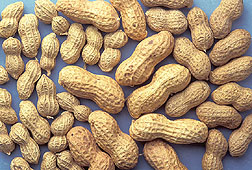
Move over, soybeans and corn: Peanuts may be elbowing their way into the biodiesel fuel market. Agricultural Research Service (ARS) scientists are searching for economically feasible peanut varieties for that very purpose.
Agronomist Wilson Faircloth at the ARS National Peanut Research Laboratory at Dawson, Ga., and Daniel Geller, a collaborative engineer at the University of Georgia, are testing a peanut called Georganic. It's not suited to current commercial edible standards for peanuts, but is high in oil and has low production input costs.
Georganic—or similar varieties—will likely be the future of peanut biodiesel because it can be planted and grown with just one herbicide application for weed control, compared to the three to four applications typically sprayed during a growing season for edible peanuts. Additionally, these fuel peanuts are grown without fungicides, which are the greatest input cost in traditional peanut production.
To further reduce production costs and increase yield, the research team is also studying technology such as conservation tillage and selection of varieties with high tolerance to multiple diseases. Currently, there are 24 peanut varieties being scrutinized in this biodiesel screening project, including Georganic, which was developed by ARS breeders in Tifton, Ga. Promising varieties also include DP-1 and Georgia-04S, a new high-oleic-acid, Spanish-type peanut.
Many old and new peanut varieties are being tested for field performance, and their oils are being analyzed for diesel performance characteristics. It has been found that high-oleic-acid peanuts—a quality desired for extended shelf life of food products—also make the best biodiesel fuel.
Today, soybean oil is the primary oil used in the United States for biodiesel fuel production. Soybeans produce approximately 50 gallons of fuel per acre, while traditionally grown peanuts can produce approximately 120 to 130 gallons of biodiesel fuel per acre.
ARS is the U.S. Department of Agriculture's chief scientific research agency.
