


This page has been archived and is being provided for reference purposes only. The page is no longer being updated, and therefore, links on the page may be invalid.
|
|
Scientists Seeking Biocontrols Against Sharpshooters
By Alfredo FloresOctober 20, 2005
Help may be on the way from Agricultural Research Service (ARS) scientists in Argentina and Texas for grape growers in California who are battling the glassy winged sharpshooter.
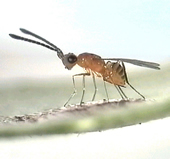
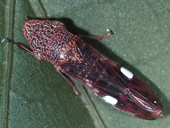
A parasitic wasp could help growers ward off the glassy winged sharpshooters (GWSS) that have been spreading plant-damaging Xylella fastidiosa bacteria in southern California vineyards since the 1990s. Now sharpshooters have made it to Hawaii and Tahiti. ARS scientists in Weslaco, Texas, have shown that the invasive GWSS in California is from Texas--part of the pest's native habitat.
X. fastidiosa causes a variety of costly plant diseases, including Pierce's disease in grapevines and leaf scorch in oleanders. Grape growers in Riverside and San Diego counties have lost about $38 million due to Pierce's disease.
For over a decade, ARS scientists and researchers at the University of California-Riverside and the California Department of Food and Agriculture have been seeking biocontrol strategies to control the sharpshooter.
At the ARS South American Biological Control Laboratory (SABCL) in Hurlingham, Argentina, researchers have been evaluating wasps that lay their eggs inside GWSS eggs, which are later consumed by the wasp young as they hatch and feed.
The primary candidate for this form of biological control is currently Gonatocerus tuberculifemur from South America. G. tuberculifemur is being tested at both the SABCL and the Beneficial Insects Research Unit in Weslaco, but the wasp has not yet been released.
Researchers in Weslaco are also searching for nymphal parasitoids in their native range in Texas. To date, all the biological control Gonatocerus species agents are egg parasitoids.
This and other ARS sharpshooter-related research is being highlighted in the current issue of California Agriculture magazine.
ARS is the U.S. Department of Agriculture's chief scientific research agency.